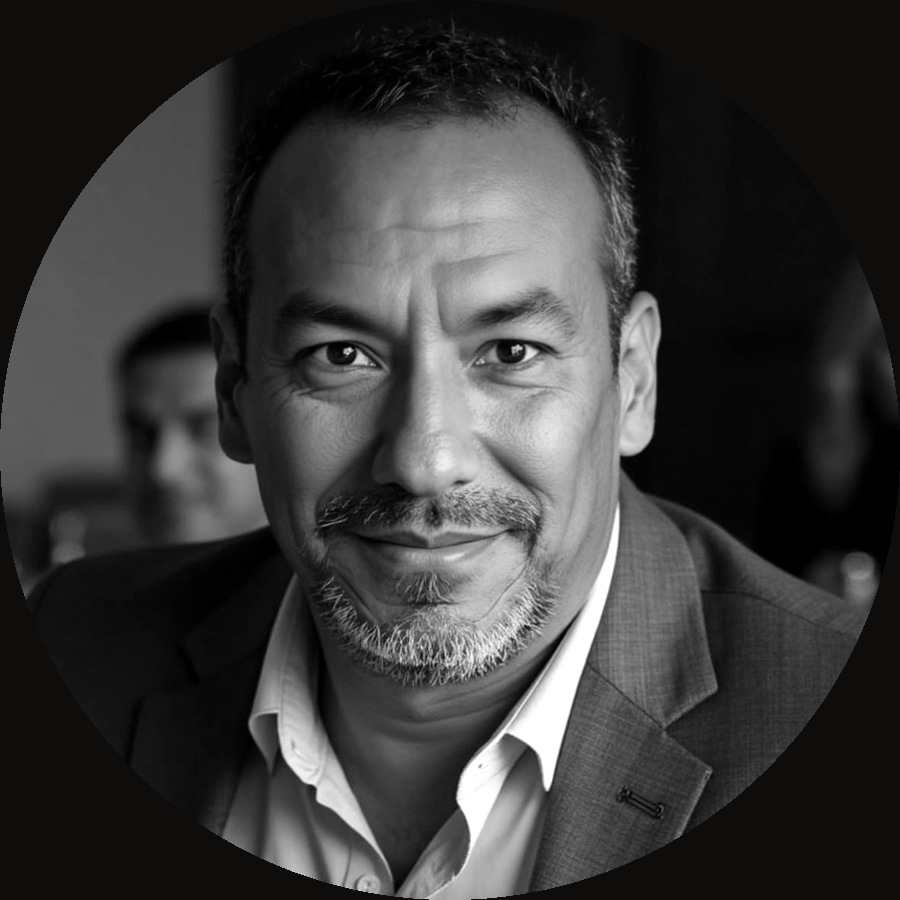
About the Founder
Richard Acosta, CSP
Founder, Acosta Risk Group
Most security executives have seen one kind of casino from the inside.
Richard Acosta has run protection at all three.
Richard Acosta has spent 28 years in casino security, risk management, and surveillance, at the level where the responsibility stops with him. He spent a decade at Station Casinos, the major multi-property locals-market operator, and was in gaming security leadership when he left. A decade inside an institution of that scale teaches how security is run as an enterprise discipline: consistent standards across many properties, a deep corporate bench, and the documentation a large company expects.
He then took that discipline into tribal gaming, spending three years at Yaamava' Resort & Casino at San Manuel, one of the most sophisticated tribal operations in the country, where security and surveillance answer to a sovereign government and its gaming commission as well as to the enterprise. Tribal gaming taught him a different kind of accountability: the owner is a nation, the regulator is in the building, and the program has to hold up to both.
Today he leads security and risk for a privately owned, multimillion dollar casino group in the heart of downtown Las Vegas, reporting directly to ownership. No corporate layer, no committee. The owner asks what is protecting the people, the property, and the money, and he answers for it.
That arc, institutional scale, sovereign tribal gaming, and independent private ownership, is unusual in the industry, and it is the reason the firm exists. Each model protects its assets differently. Each has strengths the others lack. Richard has built and run the program under all three, and he brings that full picture to operators who have only ever seen one.
The work has also crossed borders. As a private security consultant in Kuwait, where gaming is illegal and the discipline travels without the casino, he oversaw protective operations across every brand of a retail group, advised its owner directly on operations and procedure, built working partnerships with law enforcement in Kuwait City, and sold and serviced security contracts of his own. Closer to home, he has advised a large grocery group in the Las Vegas valley on security and loss prevention across its stores. Different industries, same job: protect the people, the property, and the money, and answer to the owner for it.
Casino security is its own profession. It is not policing and it is not soldiering, and the instincts that serve an officer on a street or a soldier in the field do not transfer cleanly to a floor that runs on guest experience, regulatory scrutiny, and liability exposure. Owners who staff the top of the department from outside the industry often learn that the expensive way. Richard did not come to gaming from somewhere else. He learned the work where it is practiced, on the floor, in the surveillance room, and in the owner's office, and he has spent 28 years refining it there.
He holds the Certified Surveillance Professional (CSP) designation, is TASER certified by Axon, current through 2026, is NRA certified, and is a CCW instructor registered with the Las Vegas Metropolitan Police Department. He trains and qualifies armed teams and writes the armed guard policies and procedures that stand behind them. He has built and run complete K9 detection and patrol programs, from policy and budget to handler hiring, training, and daily operations. Thousands of his investigations were carried through in partnership with local and federal law enforcement, and he has worked alongside regulators, insurers, and counsel throughout his career. He is retained by both plaintiff and defense attorneys as an expert in casino security matters.
Clients do not hire Acosta Risk Group for reassurance. They hire it because Richard has already carried the exact exposure keeping them up at night, and because he will tell them the truth about their program before a plaintiff's attorney, a regulator, or a loss tells it for them.
Verdicts against hospitality operators are growing, and the standard of care is being set in courtrooms by the practices of the best-run properties. Operators who cannot document their program will be judged against those who can.
Tribal operations are already among the most sophisticated in the country, and commissions are asking harder questions of their programs and their vendors. Advisors who have not worked inside that structure will find it harder to be useful there.
Analytics, facial recognition, and integrated systems are changing surveillance and security. They are also creating new evidence, new privacy exposure, and new ways to be wrong at scale. Someone still has to decide what the property is actually protecting against.
Richard conducts the assessment, writes the findings, and delivers the readout. Clients are not handed to a junior team after the first meeting.
The firm sits on the owner's side of the table. It sells no equipment, staffs no posts, and has no relationship with any integrator or guard company that could color its advice.
Every recommendation is made with the deposition, the audit, and the owner's next board meeting already in view. A control that cannot be explained later is not a control. The firm builds programs that hold when they are examined, because they will be.
Clients are not named. Incidents are not attached to operators. One client's matters are never discussed with another. The firm works in the owner's name, not its own. In this industry that is not a courtesy; it is part of the service.
Share a brief note on your property, your matter, or what prompted the outreach. Every inquiry is held in confidence and carries no obligation.